


Oct 19, 2026
Musixmatch takes the next step toward solving who owns music, and who gets paid.
Musixmatch has acquired Music Reports. Here is why.
Somewhere today, a songwriter is looking at a royalty statement and finding a number that doesn't add up. Not because she did anything wrong. But somewhere between the song leaving her hands and the statement coming back, the information about who wrote what got blurry - a split nobody confirmed, a name spelled two ways, one song living in three databases as three different songs.
That gap isn't a rounding error. For most songwriters, it's the difference between a career and a hobby. We've spent our entire life as a company working to close that gap.
Why we started with lyrics
Musixmatch began with something that seemed small: making sure a song's lyrics were correct, and that anyone could find them.
People thought of it as a nice little feature. It wasn't. Lyrics are the part of a song people carry with them - the line you text someone at 2 am, the verse someone got tattooed, the chorus that got you through a tough year. Getting the lyrics right is an act of respect toward those who write them.
But it taught us something we didn't expect. To get lyrics truly right at scale, you have to know precisely which song you're looking at. Which recording. Which version. Which of the four different songs sharing the same title. We ended up with an obsession about musical identity - and identity turns out to be the hardest problem in this industry.
Because there's a second song behind every song. Not the one you hear - the one composed of writers, publishers, shares, territories, and agreements. That invisible song decides who gets paid. And as music grows, that invisible song grows more complex.
We are expanding the Musixmatch ecosystem. And it’s the right time.
This is the moment Musixmatch grows into a platform for music rights and administration. Not a lyrics service that also does other things - a place where lyrics are the core layer among many, and the data underneath connects them all.
Rights identification. Royalty reporting. Cue sheets for film and television. Licensing operations. Lyrics. All of it running on a single, connected understanding of what a song is and who it belongs to.
We've been building toward this for years without saying it out loud. Every product we shipped was a step toward the same place: better data, resolved with more precision, put to work for whoever needs it. This is the step that makes everything that came before make sense.
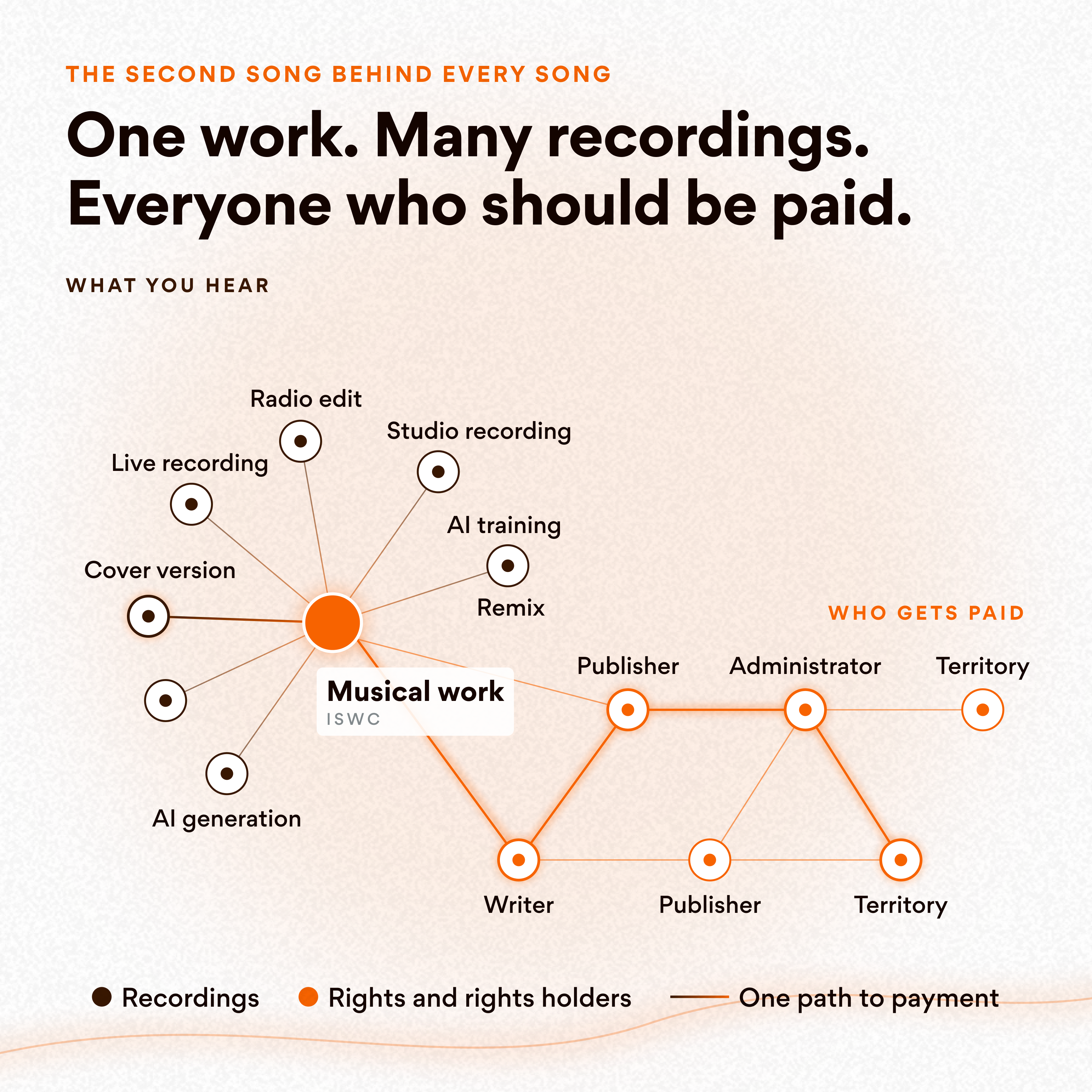
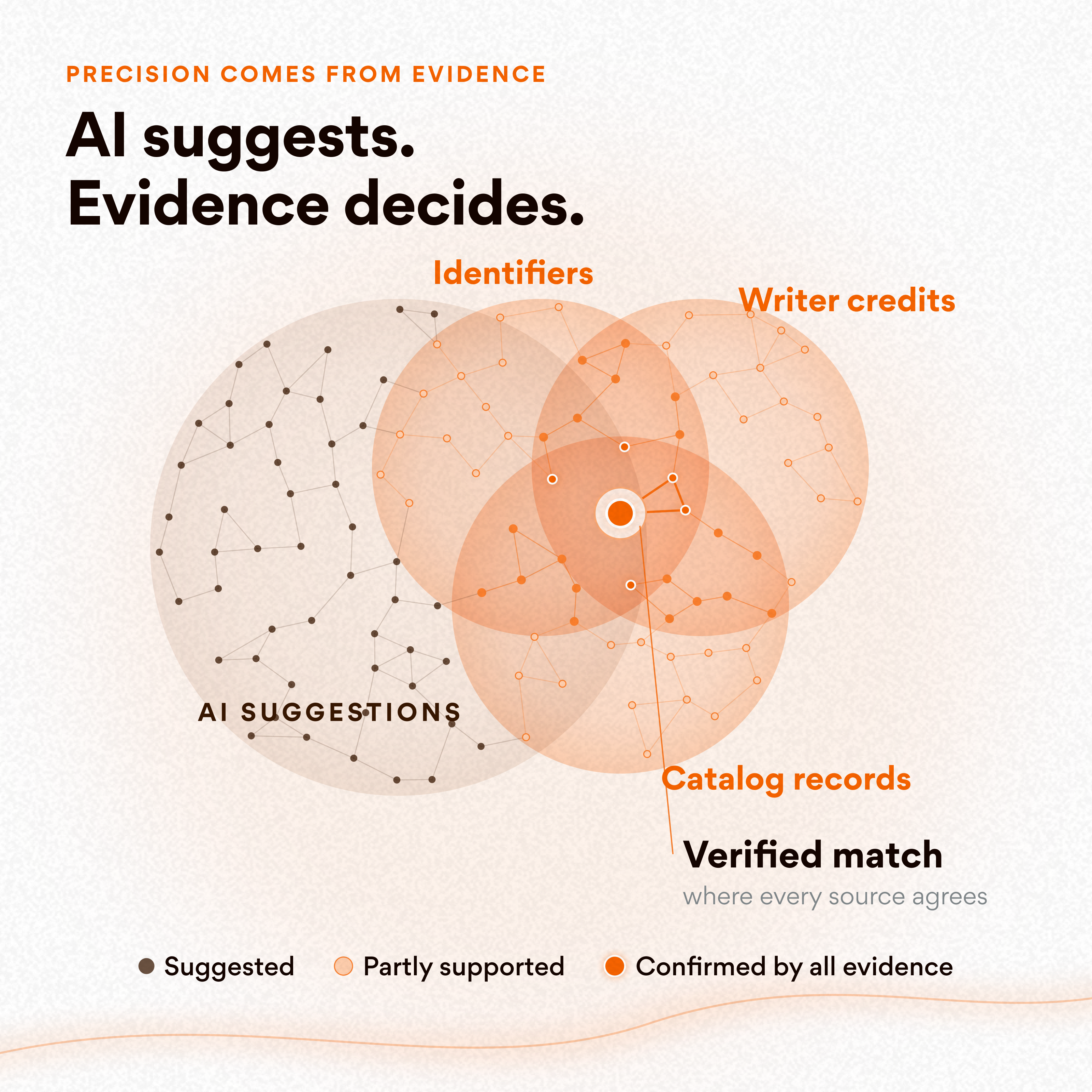
The way music is created, distributed, and listened to keeps evolving, and AI is accelerating that evolution. More music is released every day, in more versions, across more platforms, formats and territories than ever before, and every one of those uses carries rights that must be recognized. As the landscape grows richer, it also grows more complex: one song can live as a studio recording, a live performance, a cover, a remix and a sync placement, each connected to writers, publishers and shares that can change over time. That's exactly why a scaled and trusted platform for rights and royalties matters. The same technology that is expanding music also gives us new ways to understand it. AI can help us read the details that make each case unique, and connect and reconcile combined rights databases at a new scale, continuously, as catalogs and ownership evolve. Precision still comes from evidence: a model can suggest a match, but verified data and catalog records decide whether it holds, reproducible systems make the calculations, and the people who know this industry stay in control of what remains uncertain. That balance between human experts empowered with AI to navigate the complexity and verified data behind every decision, is what makes this the right moment to invest and build a nimble, modern and world-class ecosystem for rights administration and royalty management.
Songdex and the question of who owns a song
Songdex is one of the most complete independent registries of who owns what in music - and with Music Reports, it becomes part of Musixmatch. It was built over decades of patient, deeply human work: musicologists and researchers resolving conflicts and chasing missing shares, because someone always deserves to be properly paid. There’s no shortcut to that. You can’t scrape it, and you can’t generate it. You can only do the work for years, and care about getting it right.Songdex is one of the rarest things in this industry: a registry with no bias. It doesn’t collect for some writers and not others, and it has no stake in how a claim resolves. When Songdex says who owns a song, it has no reason to say anything but the truth. That independence is what makes it valuable, and it stays intact as Songdex becomes part of the Musixmatch ecosystem.
What changes is what sits underneath. We’re bringing these technologies together: Songdex connects with Musixmatch’s own data, built over sixteen years of matching recordings to the compositions and rights holders behind them. Two connected datasets aren’t twice as useful as one; every new connection makes the existing ones more precise. A rights match gains corroborating evidence. A royalty calculation resolves with the highest of confidence. The acquisition also brings Blokur’s rights-matching technology into Musixmatch, adding to the engine that connects all of this together.
This has never been about adding more products. It’s about making the data layer deeper, the technology on top of it sharper, and giving the people who know this industry - the experts, the rights specialists, the catalog researchers - a bigger, better-connected and modern canvas to work on. Our ambition is to build the most reliable foundation for music administration: the one the industry can count on to determine who gets paid.
Back to that songwriter
She'll probably never hear the words "Songdex" or "rights administration," and she shouldn't have to. That's the point - infrastructure has done its job when nobody has to think about it.
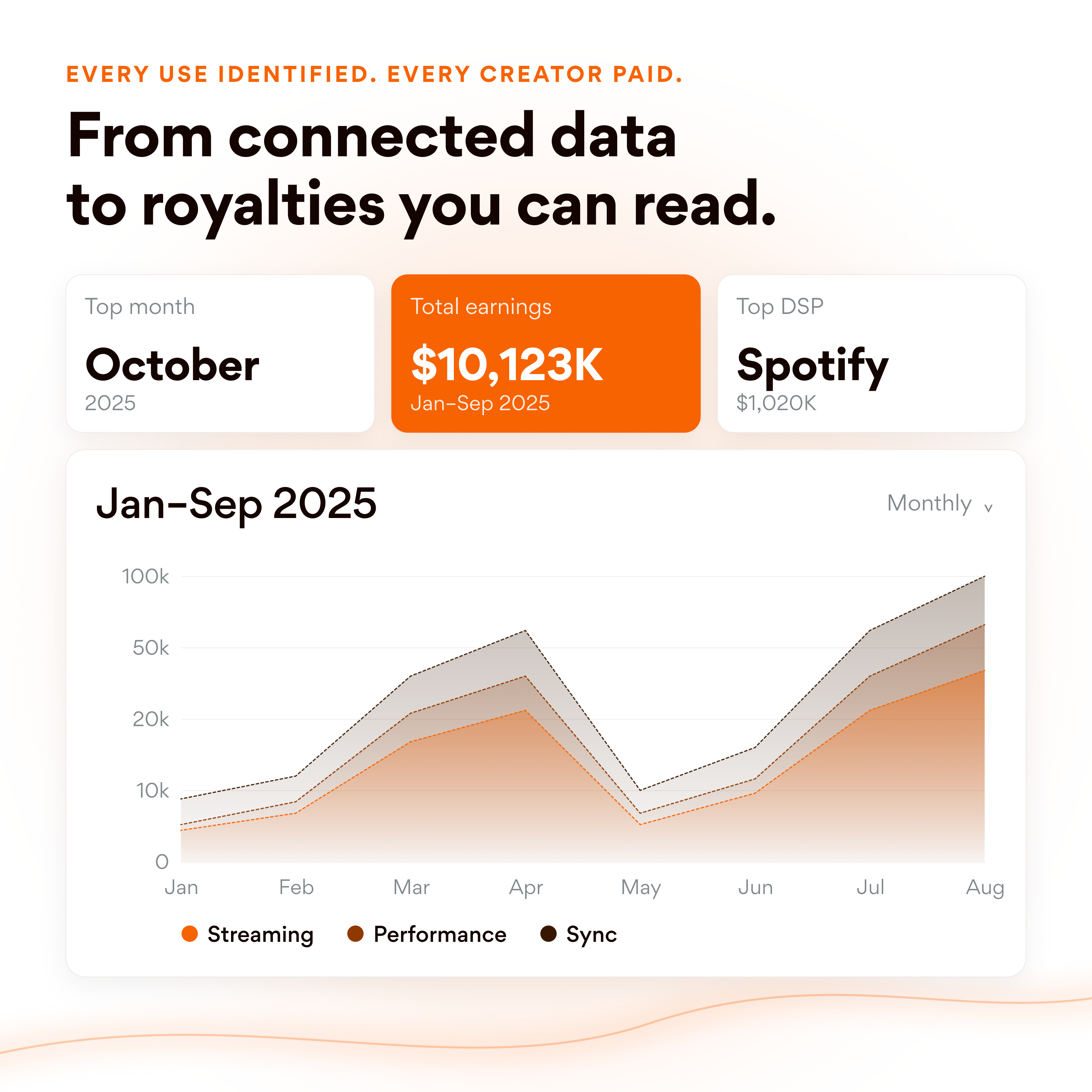
But the next time she opens a statement, we want the number to make sense. Her songs correctly registered, her shares correct, her money on time. We want her to look at a line in a report and see her own work reflected accurately back at her.That's the whole ambition. It always was. We just started with the words.
Media contact
On deadline? Email the press team directly. We reply fast, arrange interviews, and confirm facts before you publish.


🇮🇹 Made with love & passion in Italy 🌎 Enjoyed everywhere
Oct 19, 2026
Musixmatch takes the next step toward solving who owns music, and who gets paid.
Musixmatch has acquired Music Reports. Here is why.
Somewhere today, a songwriter is looking at a royalty statement and finding a number that doesn't add up. Not because she did anything wrong. But somewhere between the song leaving her hands and the statement coming back, the information about who wrote what got blurry - a split nobody confirmed, a name spelled two ways, one song living in three databases as three different songs.
That gap isn't a rounding error. For most songwriters, it's the difference between a career and a hobby. We've spent our entire life as a company working to close that gap.
Why we started with lyrics
Musixmatch began with something that seemed small: making sure a song's lyrics were correct, and that anyone could find them.
People thought of it as a nice little feature. It wasn't. Lyrics are the part of a song people carry with them - the line you text someone at 2 am, the verse someone got tattooed, the chorus that got you through a tough year. Getting the lyrics right is an act of respect toward those who write them.
But it taught us something we didn't expect. To get lyrics truly right at scale, you have to know precisely which song you're looking at. Which recording. Which version. Which of the four different songs sharing the same title. We ended up with an obsession about musical identity - and identity turns out to be the hardest problem in this industry.
Because there's a second song behind every song. Not the one you hear - the one composed of writers, publishers, shares, territories, and agreements. That invisible song decides who gets paid. And as music grows, that invisible song grows more complex.
We are expanding the Musixmatch ecosystem. And it’s the right time.
This is the moment Musixmatch grows into a platform for music rights and administration. Not a lyrics service that also does other things - a place where lyrics are the core layer among many, and the data underneath connects them all.
Rights identification. Royalty reporting. Cue sheets for film and television. Licensing operations. Lyrics. All of it running on a single, connected understanding of what a song is and who it belongs to.
We've been building toward this for years without saying it out loud. Every product we shipped was a step toward the same place: better data, resolved with more precision, put to work for whoever needs it. This is the step that makes everything that came before make sense.
The way music is created, distributed, and listened to keeps evolving, and AI is accelerating that evolution. More music is released every day, in more versions, across more platforms, formats and territories than ever before, and every one of those uses carries rights that must be recognized. As the landscape grows richer, it also grows more complex: one song can live as a studio recording, a live performance, a cover, a remix and a sync placement, each connected to writers, publishers and shares that can change over time. That's exactly why a scaled and trusted platform for rights and royalties matters. The same technology that is expanding music also gives us new ways to understand it. AI can help us read the details that make each case unique, and connect and reconcile combined rights databases at a new scale, continuously, as catalogs and ownership evolve. Precision still comes from evidence: a model can suggest a match, but verified data and catalog records decide whether it holds, reproducible systems make the calculations, and the people who know this industry stay in control of what remains uncertain. That balance between human experts empowered with AI to navigate the complexity and verified data behind every decision, is what makes this the right moment to invest and build a nimble, modern and world-class ecosystem for rights administration and royalty management.
Songdex and the question of who owns a song
Songdex is one of the most complete independent registries of who owns what in music - and with Music Reports, it becomes part of Musixmatch. It was built over decades of patient, deeply human work: musicologists and researchers resolving conflicts and chasing missing shares, because someone always deserves to be properly paid. There’s no shortcut to that. You can’t scrape it, and you can’t generate it. You can only do the work for years, and care about getting it right.Songdex is one of the rarest things in this industry: a registry with no bias. It doesn’t collect for some writers and not others, and it has no stake in how a claim resolves. When Songdex says who owns a song, it has no reason to say anything but the truth. That independence is what makes it valuable, and it stays intact as Songdex becomes part of the Musixmatch ecosystem.
What changes is what sits underneath. We’re bringing these technologies together: Songdex connects with Musixmatch’s own data, built over sixteen years of matching recordings to the compositions and rights holders behind them. Two connected datasets aren’t twice as useful as one; every new connection makes the existing ones more precise. A rights match gains corroborating evidence. A royalty calculation resolves with the highest of confidence. The acquisition also brings Blokur’s rights-matching technology into Musixmatch, adding to the engine that connects all of this together.
This has never been about adding more products. It’s about making the data layer deeper, the technology on top of it sharper, and giving the people who know this industry - the experts, the rights specialists, the catalog researchers - a bigger, better-connected and modern canvas to work on. Our ambition is to build the most reliable foundation for music administration: the one the industry can count on to determine who gets paid.
Back to that songwriter
She'll probably never hear the words "Songdex" or "rights administration," and she shouldn't have to. That's the point - infrastructure has done its job when nobody has to think about it.
But the next time she opens a statement, we want the number to make sense. Her songs correctly registered, her shares correct, her money on time. We want her to look at a line in a report and see her own work reflected accurately back at her.That's the whole ambition. It always was. We just started with the words.
Media contact
On deadline? Email the press team directly. We reply fast, arrange interviews, and confirm facts before you publish.


🇮🇹 Made with love & passion in Italy 🌎 Enjoyed everywhere


NEWSROOM
Oct 19, 2026
Musixmatch takes the next step toward solving who owns music, and who gets paid.
Musixmatch has acquired Music Reports. Here is why.
Somewhere today, a songwriter is looking at a royalty statement and finding a number that doesn't add up. Not because she did anything wrong. But somewhere between the song leaving her hands and the statement coming back, the information about who wrote what got blurry - a split nobody confirmed, a name spelled two ways, one song living in three databases as three different songs.
That gap isn't a rounding error. For most songwriters, it's the difference between a career and a hobby. We've spent our entire life as a company working to close that gap.
Why we started with lyrics
Musixmatch began with something that seemed small: making sure a song's lyrics were correct, and that anyone could find them.
People thought of it as a nice little feature. It wasn't. Lyrics are the part of a song people carry with them - the line you text someone at 2 am, the verse someone got tattooed, the chorus that got you through a tough year. Getting the lyrics right is an act of respect toward those who write them.
But it taught us something we didn't expect. To get lyrics truly right at scale, you have to know precisely which song you're looking at. Which recording. Which version. Which of the four different songs sharing the same title. We ended up with an obsession about musical identity - and identity turns out to be the hardest problem in this industry.
Because there's a second song behind every song. Not the one you hear - the one composed of writers, publishers, shares, territories, and agreements. That invisible song decides who gets paid. And as music grows, that invisible song grows more complex.
We are expanding the Musixmatch ecosystem. And it’s the right time.
This is the moment Musixmatch grows into a platform for music rights and administration. Not a lyrics service that also does other things - a place where lyrics are the core layer among many, and the data underneath connects them all.
Rights identification. Royalty reporting. Cue sheets for film and television. Licensing operations. Lyrics. All of it running on a single, connected understanding of what a song is and who it belongs to.
We've been building toward this for years without saying it out loud. Every product we shipped was a step toward the same place: better data, resolved with more precision, put to work for whoever needs it. This is the step that makes everything that came before make sense.
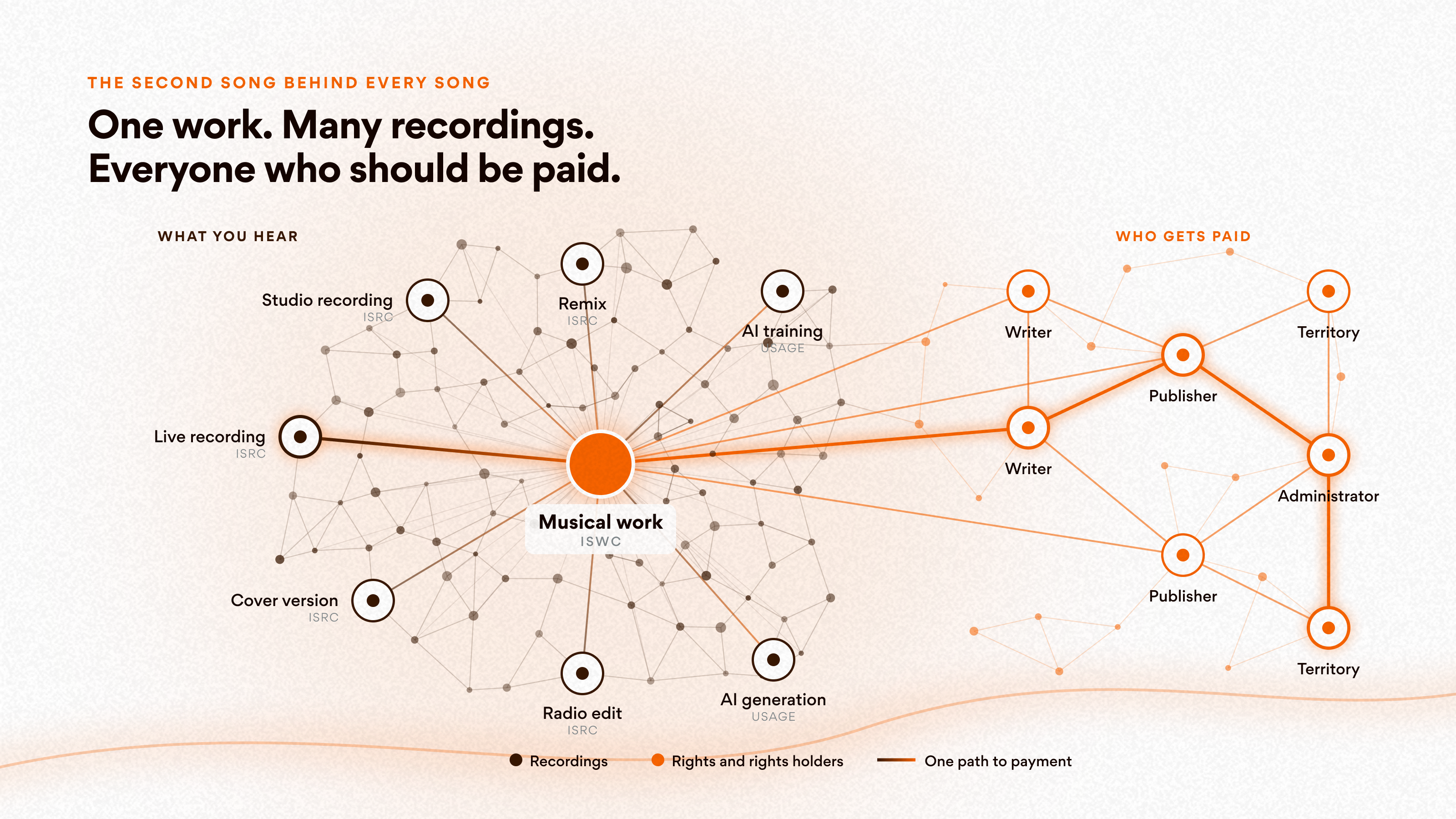
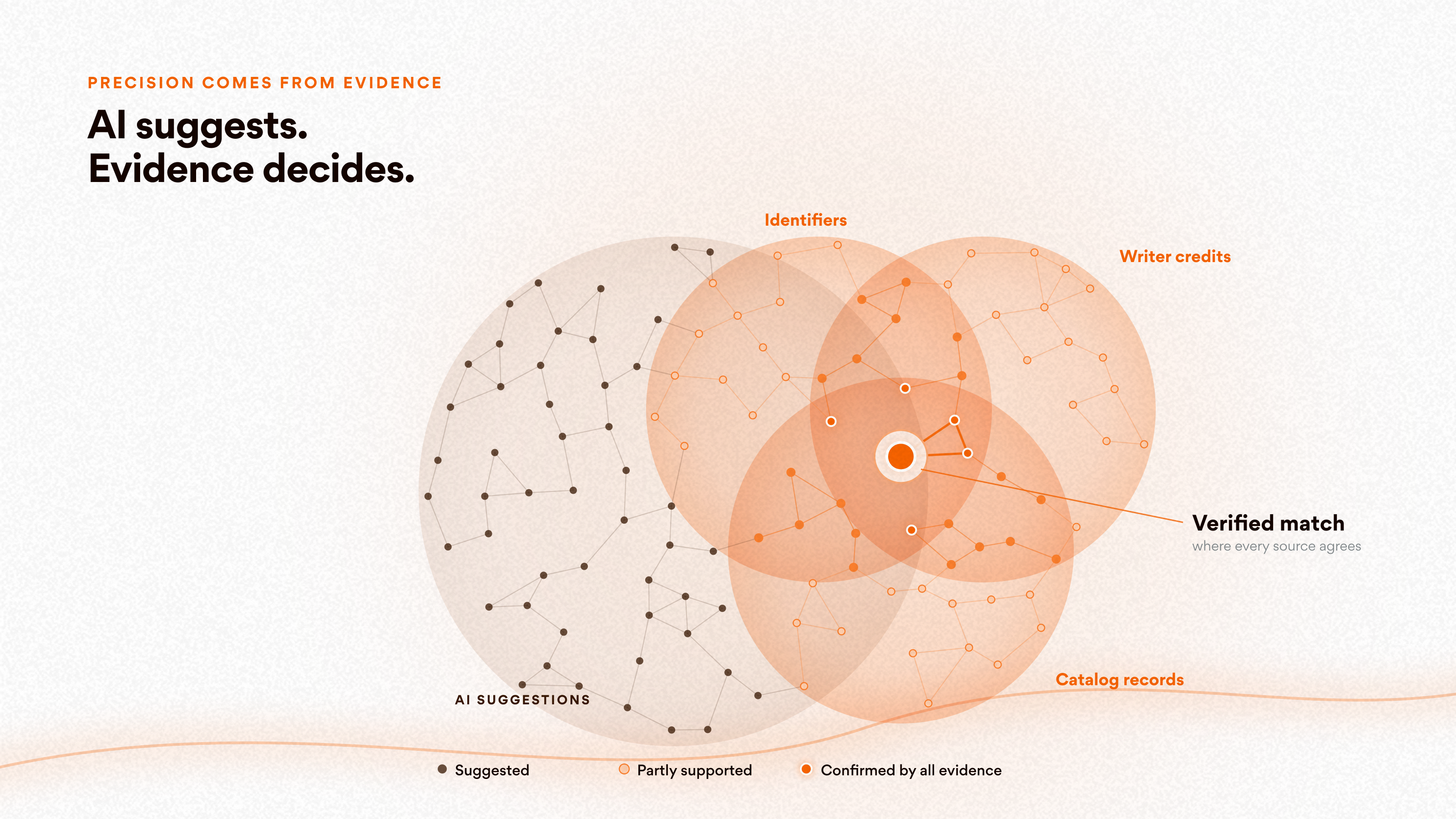
The way music is created, distributed, and listened to keeps evolving, and AI is accelerating that evolution. More music is released every day, in more versions, across more platforms, formats and territories than ever before, and every one of those uses carries rights that must be recognized. As the landscape grows richer, it also grows more complex: one song can live as a studio recording, a live performance, a cover, a remix and a sync placement, each connected to writers, publishers and shares that can change over time. That's exactly why a scaled and trusted platform for rights and royalties matters. The same technology that is expanding music also gives us new ways to understand it. AI can help us read the details that make each case unique, and connect and reconcile combined rights databases at a new scale, continuously, as catalogs and ownership evolve. Precision still comes from evidence: a model can suggest a match, but verified data and catalog records decide whether it holds, reproducible systems make the calculations, and the people who know this industry stay in control of what remains uncertain. That balance between human experts empowered with AI to navigate the complexity and verified data behind every decision, is what makes this the right moment to invest and build a nimble, modern and world-class ecosystem for rights administration and royalty management.
Songdex and the question of who owns a song
Songdex is one of the most complete independent registries of who owns what in music - and with Music Reports, it becomes part of Musixmatch. It was built over decades of patient, deeply human work: musicologists and researchers resolving conflicts and chasing missing shares, because someone always deserves to be properly paid. There’s no shortcut to that. You can’t scrape it, and you can’t generate it. You can only do the work for years, and care about getting it right.Songdex is one of the rarest things in this industry: a registry with no bias. It doesn’t collect for some writers and not others, and it has no stake in how a claim resolves. When Songdex says who owns a song, it has no reason to say anything but the truth. That independence is what makes it valuable, and it stays intact as Songdex becomes part of the Musixmatch ecosystem.
What changes is what sits underneath. We’re bringing these technologies together: Songdex connects with Musixmatch’s own data, built over sixteen years of matching recordings to the compositions and rights holders behind them. Two connected datasets aren’t twice as useful as one; every new connection makes the existing ones more precise. A rights match gains corroborating evidence. A royalty calculation resolves with the highest of confidence. The acquisition also brings Blokur’s rights-matching technology into Musixmatch, adding to the engine that connects all of this together.
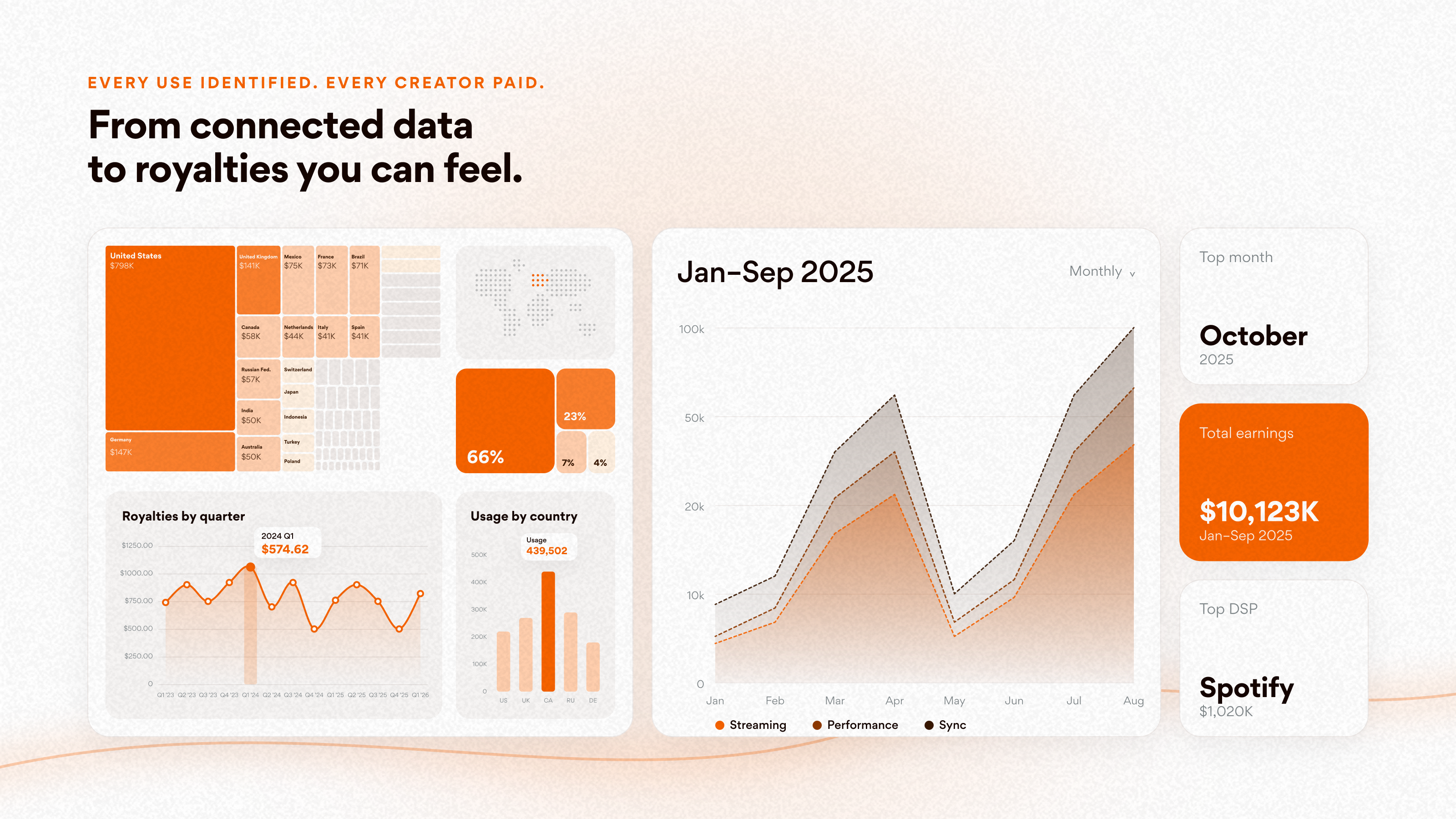
This has never been about adding more products. It’s about making the data layer deeper, the technology on top of it sharper, and giving the people who know this industry - the experts, the rights specialists, the catalog researchers - a bigger, better-connected and modern canvas to work on. Our ambition is to build the most reliable foundation for music administration: the one the industry can count on to determine who gets paid.
Back to that songwriter
She'll probably never hear the words "Songdex" or "rights administration," and she shouldn't have to. That's the point - infrastructure has done its job when nobody has to think about it.
But the next time she opens a statement, we want the number to make sense. Her songs correctly registered, her shares correct, her money on time. We want her to look at a line in a report and see her own work reflected accurately back at her.That's the whole ambition. It always was. We just started with the words.
Media contact
On deadline? Email the press team directly. We reply fast, arrange interviews, and confirm facts before you publish.
🇮🇹 Made with love & passion in Italy 🌎 Enjoyed everywhere
NEWSROOM
Oct 19, 2026
Musixmatch takes the next step toward solving who owns music, and who gets paid.
Musixmatch has acquired Music Reports. Here is why.
Somewhere today, a songwriter is looking at a royalty statement and finding a number that doesn't add up. Not because she did anything wrong. But somewhere between the song leaving her hands and the statement coming back, the information about who wrote what got blurry - a split nobody confirmed, a name spelled two ways, one song living in three databases as three different songs.
That gap isn't a rounding error. For most songwriters, it's the difference between a career and a hobby. We've spent our entire life as a company working to close that gap.
Why we started with lyrics
Musixmatch began with something that seemed small: making sure a song's lyrics were correct, and that anyone could find them.
People thought of it as a nice little feature. It wasn't. Lyrics are the part of a song people carry with them - the line you text someone at 2 am, the verse someone got tattooed, the chorus that got you through a tough year. Getting the lyrics right is an act of respect toward those who write them.
But it taught us something we didn't expect. To get lyrics truly right at scale, you have to know precisely which song you're looking at. Which recording. Which version. Which of the four different songs sharing the same title. We ended up with an obsession about musical identity - and identity turns out to be the hardest problem in this industry.
Because there's a second song behind every song. Not the one you hear - the one composed of writers, publishers, shares, territories, and agreements. That invisible song decides who gets paid. And as music grows, that invisible song grows more complex.
We are expanding the Musixmatch ecosystem. And it’s the right time.
This is the moment Musixmatch grows into a platform for music rights and administration. Not a lyrics service that also does other things - a place where lyrics are the core layer among many, and the data underneath connects them all.
Rights identification. Royalty reporting. Cue sheets for film and television. Licensing operations. Lyrics. All of it running on a single, connected understanding of what a song is and who it belongs to.
We've been building toward this for years without saying it out loud. Every product we shipped was a step toward the same place: better data, resolved with more precision, put to work for whoever needs it. This is the step that makes everything that came before make sense.
The way music is created, distributed, and listened to keeps evolving, and AI is accelerating that evolution. More music is released every day, in more versions, across more platforms, formats and territories than ever before, and every one of those uses carries rights that must be recognized. As the landscape grows richer, it also grows more complex: one song can live as a studio recording, a live performance, a cover, a remix and a sync placement, each connected to writers, publishers and shares that can change over time. That's exactly why a scaled and trusted platform for rights and royalties matters. The same technology that is expanding music also gives us new ways to understand it. AI can help us read the details that make each case unique, and connect and reconcile combined rights databases at a new scale, continuously, as catalogs and ownership evolve. Precision still comes from evidence: a model can suggest a match, but verified data and catalog records decide whether it holds, reproducible systems make the calculations, and the people who know this industry stay in control of what remains uncertain. That balance between human experts empowered with AI to navigate the complexity and verified data behind every decision, is what makes this the right moment to invest and build a nimble, modern and world-class ecosystem for rights administration and royalty management.
Songdex and the question of who owns a song
Songdex is one of the most complete independent registries of who owns what in music - and with Music Reports, it becomes part of Musixmatch. It was built over decades of patient, deeply human work: musicologists and researchers resolving conflicts and chasing missing shares, because someone always deserves to be properly paid. There’s no shortcut to that. You can’t scrape it, and you can’t generate it. You can only do the work for years, and care about getting it right.Songdex is one of the rarest things in this industry: a registry with no bias. It doesn’t collect for some writers and not others, and it has no stake in how a claim resolves. When Songdex says who owns a song, it has no reason to say anything but the truth. That independence is what makes it valuable, and it stays intact as Songdex becomes part of the Musixmatch ecosystem.
What changes is what sits underneath. We’re bringing these technologies together: Songdex connects with Musixmatch’s own data, built over sixteen years of matching recordings to the compositions and rights holders behind them. Two connected datasets aren’t twice as useful as one; every new connection makes the existing ones more precise. A rights match gains corroborating evidence. A royalty calculation resolves with the highest of confidence. The acquisition also brings Blokur’s rights-matching technology into Musixmatch, adding to the engine that connects all of this together.
This has never been about adding more products. It’s about making the data layer deeper, the technology on top of it sharper, and giving the people who know this industry - the experts, the rights specialists, the catalog researchers - a bigger, better-connected and modern canvas to work on. Our ambition is to build the most reliable foundation for music administration: the one the industry can count on to determine who gets paid.
Back to that songwriter
She'll probably never hear the words "Songdex" or "rights administration," and she shouldn't have to. That's the point - infrastructure has done its job when nobody has to think about it.
But the next time she opens a statement, we want the number to make sense. Her songs correctly registered, her shares correct, her money on time. We want her to look at a line in a report and see her own work reflected accurately back at her.That's the whole ambition. It always was. We just started with the words.
Media contact
On deadline? Email the press team directly. We reply fast, arrange interviews, and confirm facts before you publish.
🇮🇹 Made with love & passion in Italy 🌎 Enjoyed everywhere